Why do we promote ourselves as a "local" language school?

Paula
—4 May 2026
Let's start with a question – what does "local" mean to you?
Some of the associations that probably come to mind are "close to home", "something familiar", "warmth", "intimacy".
When we're abroad, we look for local food, local spots, a local atmosphere, because we want to feel a bit at home, to be where the locals go, to experience what they have every day.
Local seems attractive, better. Why? Because if the locals go to a particular place, if they eat at a particular restaurant, if they have picnics in this park and not another, it means they simply feel good there. And by following in their footsteps, we can experience the same.
So the word "local" carries huge value – it shows the character of a place and what we can expect. For a language school, that will certainly mean: small groups, children from the neighbourhood, committed teachers, usually from the area too. It's a place where people know each other, where you're not just a number, but a person who, like everyone else here, wants to go on a language adventure.
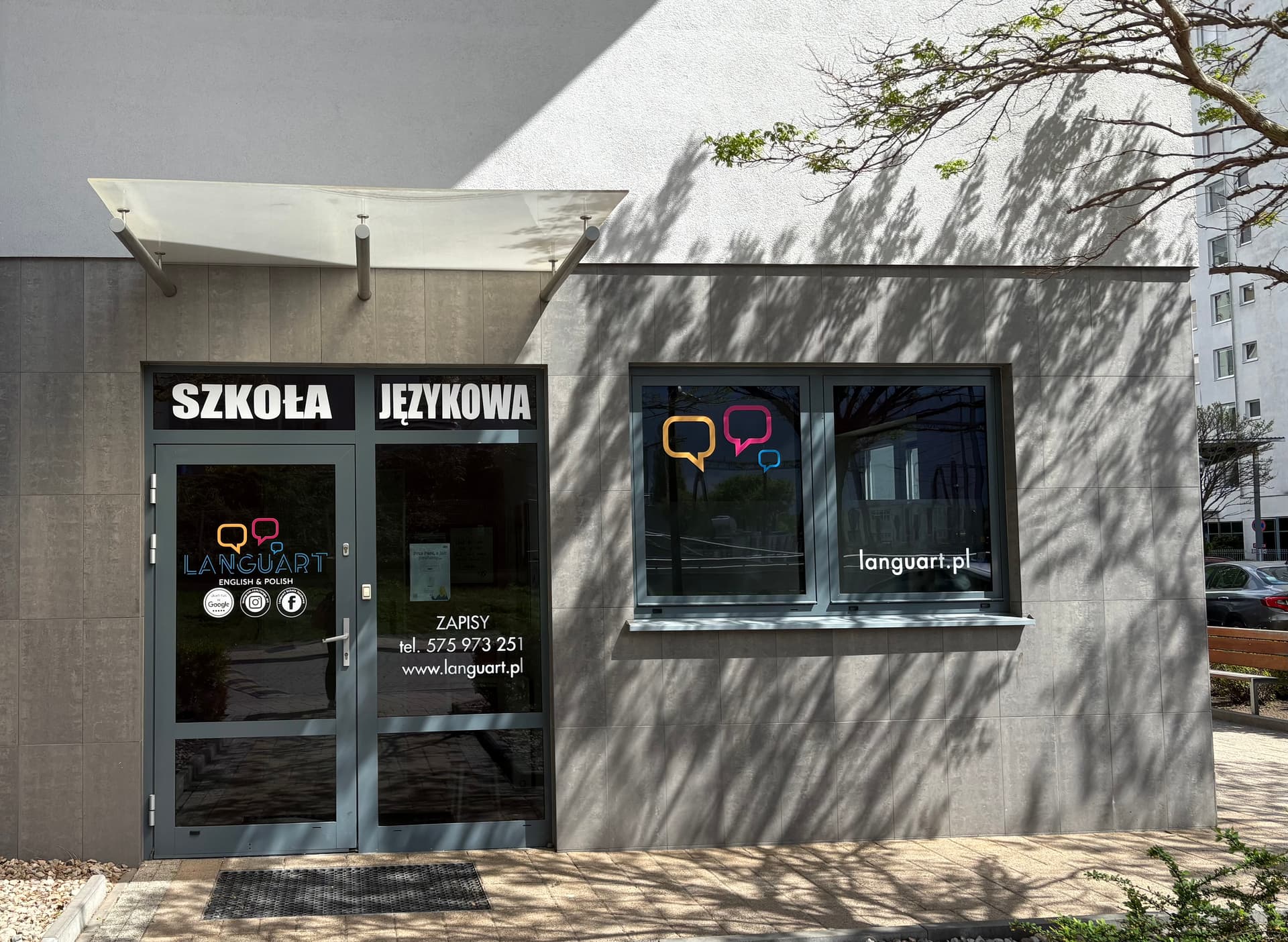
A local language school focuses a lot of what it does on the place where it is. So we, as a school in Gdańsk's Przymorze, often take up topics connected with the sea (or rather the bay 🙂) or problems such as the windy weather. We also teach typical words connected with the region, e.g. how to say "SKM", stocznia or molo in Brzeźno.
- SKM – fast urban commuter train (or simply "train")
- stocznia – shipyard
- molo – pier
Typical topics for the region, sometimes jokes too – these are things we can bring up without any awkwardness, because after all we're all from the same or a nearby neighbourhood (Gdańsk Brzeźno, Gdańsk Zaspa, Gdańsk Jelitkowo – you're all very welcome here!).
The word "local" also brings with it the responsibility to provide services at the highest level. As a local language school we take great care of our image, and feeling part of our seaside community, each of us gives the best we have and do the best we can.
That's how our courses came about:
We teach English to children and teens aged 7–18, focusing on the practical use of the language. We use drama and elements of theatre improv, so that learning the language happens almost "in passing".
We also teach teenagers and adults struggling with the language barrier. So if you dream of finally taking the ferry to Norway, but the language barrier is holding you back, be sure to check out our courses.
We teach Polish as a foreign language to share our local spirit with everyone who is our guest and wants to feel at home. You'll certainly learn plenty of local titbits: which famous person lives on Polanki Street, what the Herring March is, and why it's always windy in Przymorze. OK, that last one we can't actually guarantee – you can put it down to the charm of the place.
Local greetings, and see you soon!